Story by: Zoe Marcum, FS Communications Student Assistant
Six Decades of Warmth: Boiler #1’s Legacy at UT Knoxville
As temperatures dip across the University of Tennessee, Knoxville, warmth becomes more than a comfort, it’s a necessity. Vol fans, students, and staff rely daily on heated buildings and hot water to power through the chilly parts of the year. From steamy showers to cozy classrooms, heat is woven into campus life during the colder months. Yet few realize the immense effort behind the scenes to keep Rocky Top toasty. At the heart of it all is UTK’s Steam Plant, a vital operation maintained by dedicated teams within UTK Facilities Services, working tirelessly to ensure the campus stays warm and running.
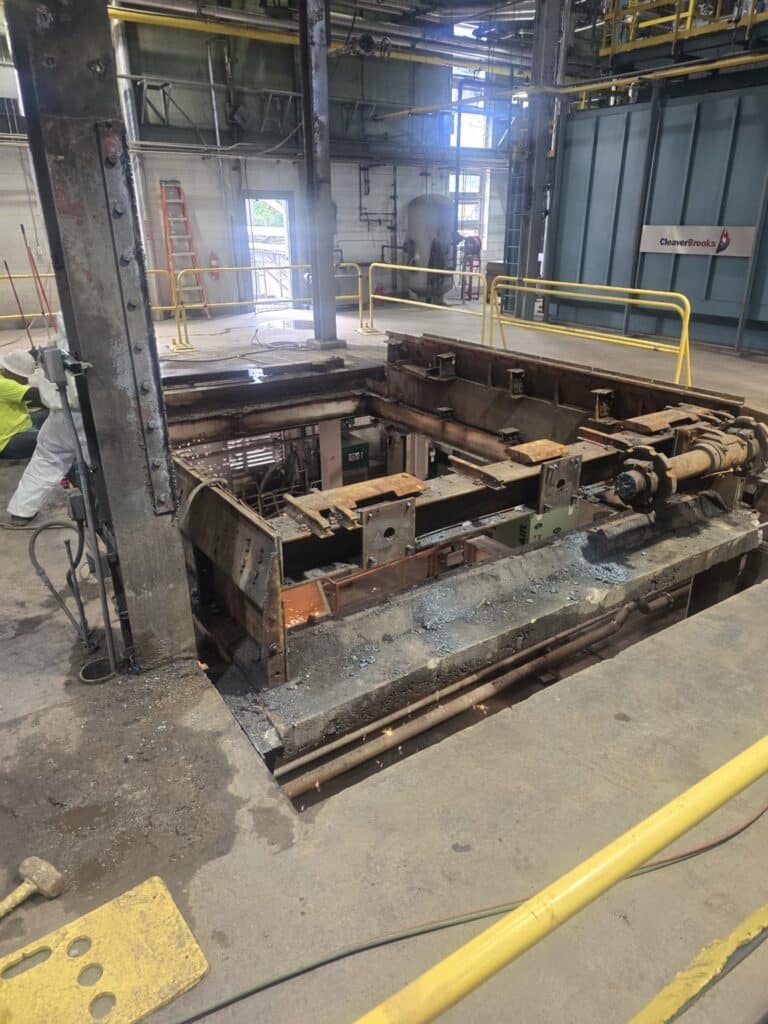
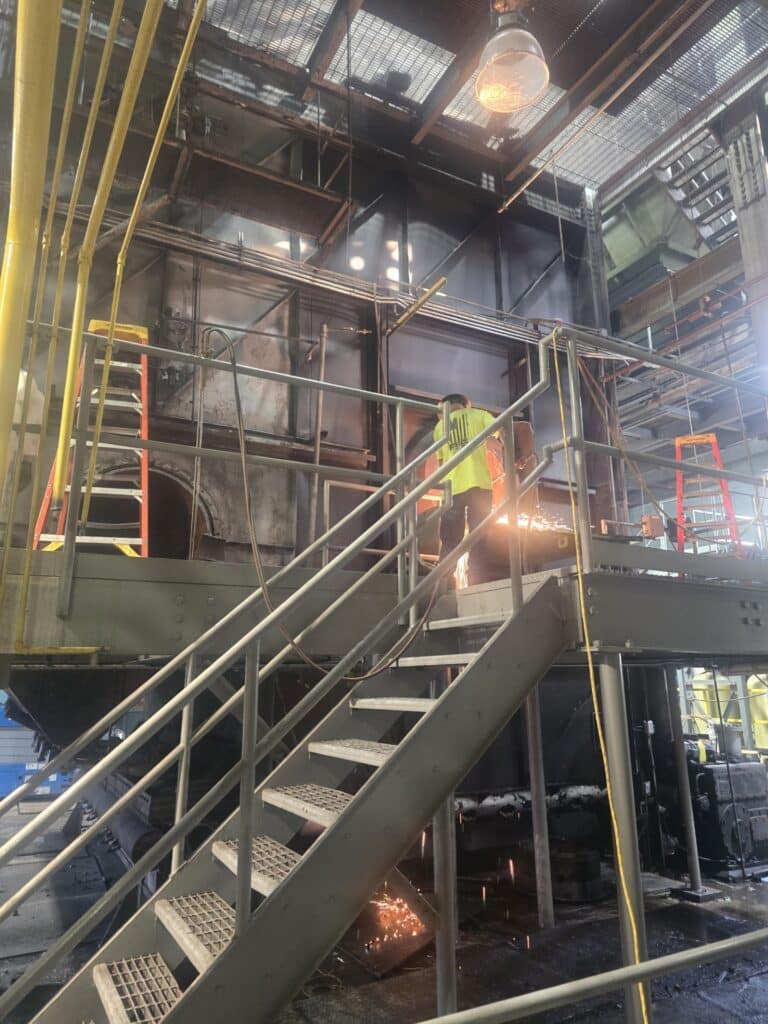
Keeping the heat flowing at UTK means making sure the boilers are up to date. That’s the very reason why Boiler #1 is finally being replaced. Installed in 1965, this workhorse kept Rocky Top warm for six decades, burning coal, natural gas, and fuel oil to meet the campus’s heating needs. Boiler #1 isn’t the only unit to be phased out. Boilers #2 and #3 were replaced in recent years due to their limited fuel capabilities. They were retrofitted to burn natural gas and fuel oil along with coal. Then coal was phased out, so they were replaced because of their age-like Boiler #1. The burner in Boiler #1 had been replaced to try to prolong its lifespan, but after years of faithful service, Boiler #1 began showing its age. It began causing issues for workers, refusing to start up sometimes, wear and tear on the pipes after years of keeping campus warm. “Redundancy is a big deal’” says Sam Claxton, a professional engineer with CMTA (the designer for this project) “Anything that goes out…we can’t just not heat the campus”. The Steam Plant had to make sure there was a overlap in the boiler’s ability to work, making sure that there was an alternative fuel in case one ran out, of extra boilers in case one quit. Having a backup for the backup. The transition away from coal began years ago, with the Steam Plant gradually shifting toward cleaner-burning natural gas. Boiler #1 was one of the last units capable of burning coal, a symbol of an older era. Now they are moving towards burning natural gas or fuel oil. There are a total of five boilers at the Steam Plant, the oldest of which was Boiler #1.
Modernizing Energy: The Future of UTK’s Steam Plant
Coal is a cheap and readily available as a fuel source, but produces high levels or carbon and carbon dioxide when burned. It also generates physical waste after burning, like ash that needs to be removed before more fuel can burn. Not to mention the mess of storing coal and actually feeding it into the boiler. Coal also has difficulty swinging sudden changes in load, while natural gases can respond to sudden shifts in demand easier. It’s cleaner, releasing fewer greenhouse gases and particle emissions. UTK stopped burning coal in March of 2015, and that means that new, innovative ways to fuel the boilers had to be found. Natural gas is the future of powering modern appliances, research has gone into making it even more efficient, and UTK is staying ahead of the curve by converting the boilers to natural gas and fuel oil and making sure campus stays warm and green.
The retirement of Boiler #1 marks another step in UTK’s ongoing effort to modernize campus infrastructure and move toward cleaner, more efficient energy. With natural gas now powering all five boilers, the Steam Plant is better equipped to handle campus demand while cutting down on emissions and maintenance headaches. It’s not flashy, but it’s essential, and thanks to the work of UTK Facilities, Rocky Top stays warm no matter how cold it gets outside.